
How Telehealth Works for Rural Patients in Illinois, Indiana, and Wisconsin

Direct Answer
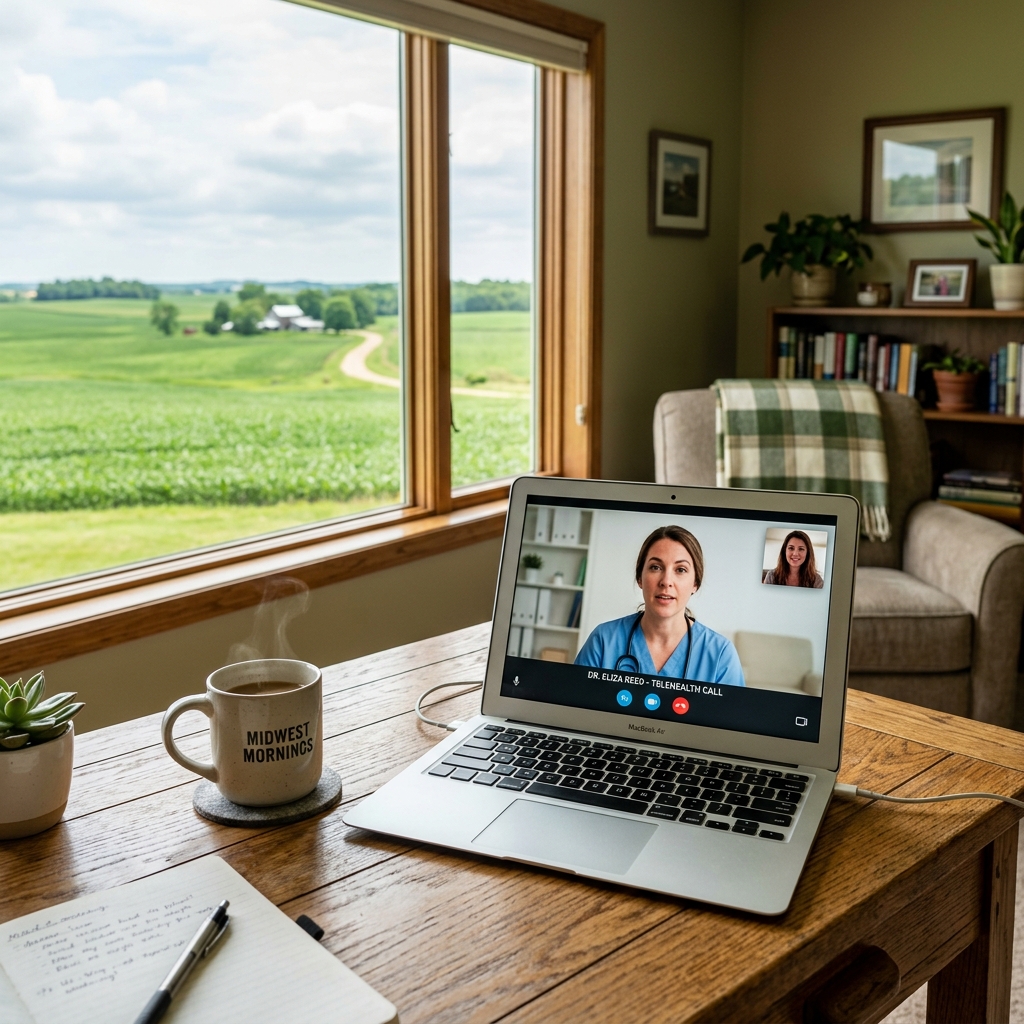
Telehealth helps rural patients in Illinois, Indiana, and Wisconsin overcome long travel distances and provider shortages by delivering primary and acute care by video. A virtual provider can evaluate symptoms, manage chronic conditions, send prescriptions to your local pharmacy, and order labs at a collection site near you. You generally need a private space, a device with a camera, and a stable internet or phone connection.
For many residents of rural Illinois, Indiana, and Wisconsin, seeing a healthcare provider can mean a long drive, time off work, and weeks of waiting for an appointment. Provider shortages in rural counties make consistent care even harder. Telehealth helps close that gap — bringing primary and chronic care to wherever you are.
Here is how virtual care at TOFAD Wellness Clinic works for rural patients across all three states.
1. The Rural Access Challenge
Rural communities across the Midwest face real barriers:
- Distance — the nearest primary care office may be an hour or more away.
- Provider shortages — many rural counties are designated as health professional shortage areas.
- Time and cost — travel, fuel, and missed work add up quickly.
- Continuity — without a consistent provider, chronic conditions can go unmanaged.
Telehealth directly addresses each of these by removing the trip to the office for visits that don’t require a hands-on exam.
2. What You Can Handle Virtually
A virtual provider can manage a wide range of needs from your home:
- Primary care for patients in Illinois, Indiana, and Wisconsin.
- Chronic disease management — blood pressure, diabetes, cholesterol, and thyroid — which depends on logs and labs more than in-office exams.
- Acute illness like colds, flu, UTIs, and sinus infections.
- Prescription refills for maintenance medications.
3. Prescriptions and Labs Without the Long Drive
Two common rural concerns — getting prescriptions and lab work — are built into virtual care:
- Prescriptions are sent electronically to your preferred pharmacy, including small-town and independent pharmacies close to home.
- Lab orders are routed to a collection site near you — a LabCorp, Quest, or local hospital outpatient lab — so the only trip you make is for the blood draw itself.
This means you can manage conditions like high cholesterol with minimal travel.
4. What You Need to Get Started
Getting started is simpler than many people expect:
- A private space where you can talk openly.
- A device with a camera — a smartphone is enough.
- A stable internet or phone connection — if video struggles, a phone call can often work.
Not sure your setup is ready? Our guide on preparing for a telehealth visit walks through it step by step.
Telehealth does not replace emergency care or services that require a physical exam, but for everyday primary and chronic care, it can be a dependable, consistent partner — no matter how far you live from the nearest clinic.
Ready to connect? Book a virtual visit or learn how telemedicine works.