
Can a Nurse Practitioner Be My Primary Care Provider?

Direct Answer
Yes. A board-certified Family Nurse Practitioner (FNP) can serve as your primary care provider. FNPs are advanced practice registered nurses with graduate-level training who can assess symptoms, diagnose conditions, order and interpret labs, prescribe most medications, manage chronic diseases, and coordinate specialist referrals. Their scope of practice is defined by state law, and they often emphasize preventive, patient-centered care.
If you have ever wondered whether a Nurse Practitioner can be your main healthcare provider, you are not alone — it is one of the most common questions new patients ask. The short answer is yes, and understanding what an NP does can help you feel confident in your care.
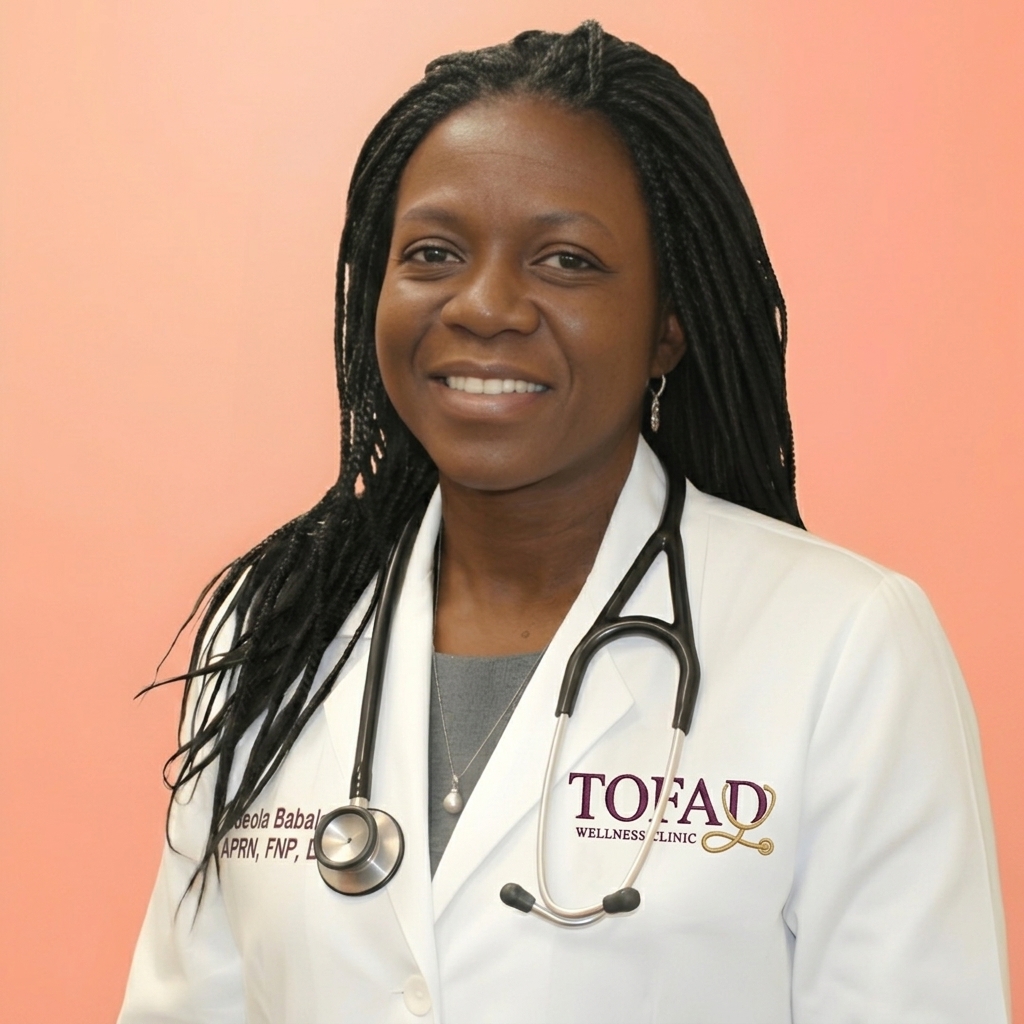
At TOFAD Wellness Clinic, care is led by Dr. Adesola Babalola, APRN, FNP-BC, DNP — a board-certified Family Nurse Practitioner with doctoral-level training. Here is what that means for you.
1. What Is a Family Nurse Practitioner?
A Family Nurse Practitioner (FNP) is an Advanced Practice Registered Nurse (APRN) who has completed graduate education — frequently a Doctor of Nursing Practice (DNP) — plus national board certification. FNPs are trained to care for patients across the lifespan, from preventive wellness to managing complex chronic conditions.
The credentials after Dr. Babalola’s name reflect this training:
- APRN — Advanced Practice Registered Nurse
- FNP-BC — Family Nurse Practitioner, Board Certified
- DNP — Doctor of Nursing Practice (the terminal practice degree in nursing)
You can read more about her background on our provider page.
2. What Can a Nurse Practitioner Do?
As a primary care provider, an FNP can:
- Diagnose and treat acute illnesses like infections, coughs, and sore throats.
- Manage chronic conditions such as high blood pressure, diabetes, and high cholesterol.
- Prescribe medications, including antibiotics and most maintenance prescriptions.
- Order and interpret labs such as A1C, lipid panels, and thyroid testing.
- Coordinate referrals to specialists when a condition requires advanced or in-person evaluation.
- Focus on prevention — screenings, lifestyle counseling, and patient education.
3. Scope of Practice Varies by State
A nurse practitioner’s authority is defined by state law. Some states grant full practice authority, while others require a collaborative agreement with a physician. TOFAD Wellness Clinic is licensed to provide virtual care to patients physically located in Illinois, Indiana, and Wisconsin, and operates in compliance with each state’s regulations.
One consistent rule everywhere: our practice does not prescribe controlled substances (such as opioids, benzodiazepines, or stimulants) through telehealth.
4. When Will an NP Refer You Elsewhere?
A good primary care provider knows the limits of any single visit. Your NP will refer you for in-person or emergency care when a condition calls for it — for example, a physical exam component, advanced imaging, a procedure, or any emergency symptom. This collaborative approach is a core part of safe, high-quality primary care.
Curious whether virtual primary care is right for you? Book a visit or explore our services.